






Switzerland by Train: Rail Transfers, Luggage and Panoramic Routes
How to reach a Swiss resort by rail: airport stations, travel times, luggage forwarding, panoramic routes and the last mile to car-free villages.
In most countries the last leg to a resort means a car. In Switzerland it usually means a train, and often a beautiful one. The network reaches almost every valley, timetables are built around connections, and the stations at Zurich and Geneva airports sit right at the terminals. Arriving by rail takes a little planning around luggage and changes, and it rewards you with some of the finest views in Europe on the way in.
From the plane to the platform
Both main gateways make the switch from air to rail easy. At Zurich and at Geneva, the railway station lies directly at the terminal, a short walk from baggage reclaim with a trolley. Trains to the main cities leave several times an hour, and long distance services connect to regional lines with timed changes, often on the same or a neighbouring platform.
Tickets are sold at machines, at the staffed travel centres in both airports and online. Standard fares are fixed, so there is no need to buy weeks ahead, although discounted saver tickets for specific trains are released in advance. First class is worth considering on arrival day: it is quieter and has more room for bags. Platform displays show the order of the carriages by sector letter, so you can wait where first class and the luggage areas will stop.
How long it takes
Swiss distances are short, but mountain railways are not fast, so think in hours rather than kilometres. Typical times from Zurich are about an hour to Lucerne, about two hours to Lugano through the Gotthard Base Tunnel, roughly three hours to Gstaad, a little over three hours to Zermatt and about three and a half hours to St. Moritz. From Geneva airport, Lausanne is about 45 minutes away and Montreux a little over an hour, while Zermatt takes around three and a half hours.
Most routes involve one or two changes. Timetables are designed around these connections, usually with a few minutes to change, and the departure boards show the platform for the onward train. Add a margin on arrival day all the same: after a long flight, a later train and a calm change are worth more than the fastest route on paper.
Luggage: send it ahead
The Swiss railways offer luggage forwarding, from station to station or from door to door, and it changes how a rail transfer feels. You hand over your cases at a staffed station or have them collected, travel with a small bag and find them waiting at your destination or at the hotel. Book it online or at a ticket counter, and allow time: station to station forwarding usually takes about a day, door to door longer, and weekends and holidays add to it.
Many travellers send their luggage on the morning of a hotel change and carry what they need for one night. On arrival day from the airport, plan to travel with your cases, or ask at the airport travel centre which forwarding options apply that day. Swiss trains have racks at the ends of carriages and space between seat backs, but large hard cases are awkward on narrow gauge mountain lines.
Panoramic routes and seat reservations
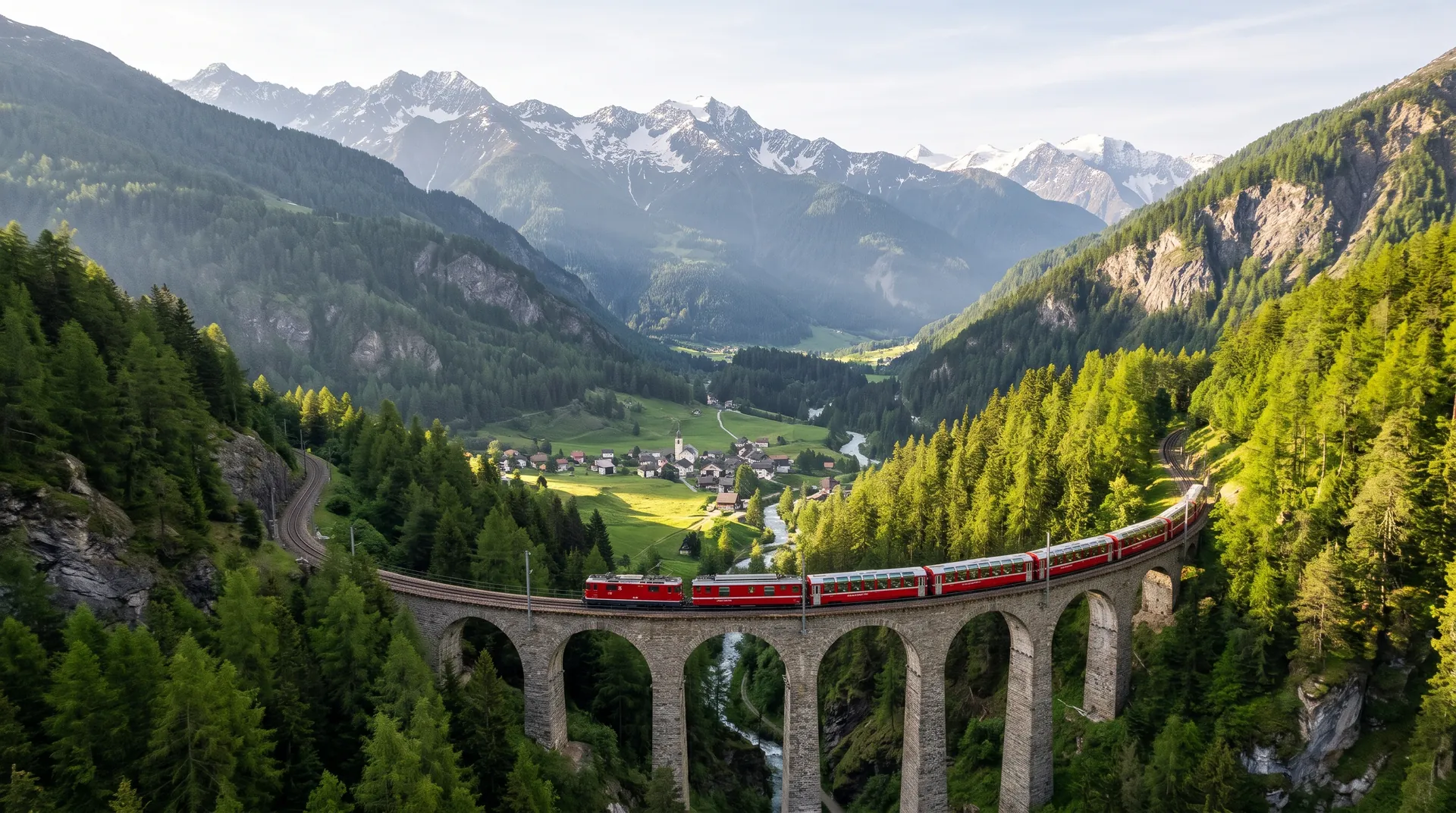
Some of the most famous railway lines in the Alps can be part of your transfer rather than a separate excursion. The slow panoramic route between Zermatt and St. Moritz crosses the Oberalp Pass and takes about eight hours. The line from the Engadin over the Bernina Pass down to Tirano in Italy, part of a UNESCO World Heritage railway, climbs above 2,200 metres without a single rack section. From Montreux, a panoramic line climbs above the lake and on to Gstaad, with connections towards Interlaken.
The dedicated panoramic trains on these routes need a seat reservation with a supplement, and in summer and around Christmas they can sell out weeks ahead. Regular regional trains run on the same tracks without a reservation, more often and at a lower cost, and the mountains outside the window are the same. Luggage space on panoramic trains is limited, which is another reason to send cases ahead.
First class, quiet zones and families
First class on Swiss trains is a calm, practical upgrade rather than a luxury product: wider seats, fewer people and space for bags. Many long distance trains have a quiet zone in first class, marked on the carriage, where phone calls and loud conversation are not welcome. For a longer trip, a visitor rail pass is often simpler than single tickets, as passes usually cover trains, most buses and lake boats and give reductions on many mountain railways.
Families have their own advantages. Young children travel free with an adult, and some intercity trains have a family carriage with a small play area. Pushchairs fit on trains and boats without fuss. For children, the train, the steamer and the cable car are often the highlight of the day, so a rail transfer becomes an outing rather than a chore.
The last mile
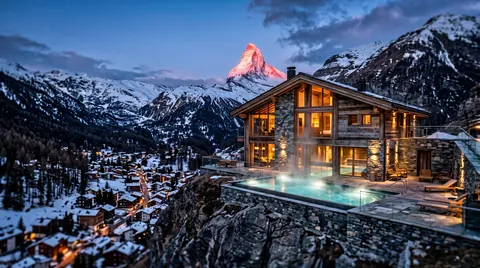
Several of the best known Swiss resorts are car-free. Zermatt, Wengen, Mürren, Saas-Fee and Braunwald are reached by train, cable car, funicular or bus, and within the village electric taxis and hotel shuttles do the work. If you drive, you leave the car in the valley: for Zermatt at Täsch, where a shuttle train runs up the valley at short intervals.
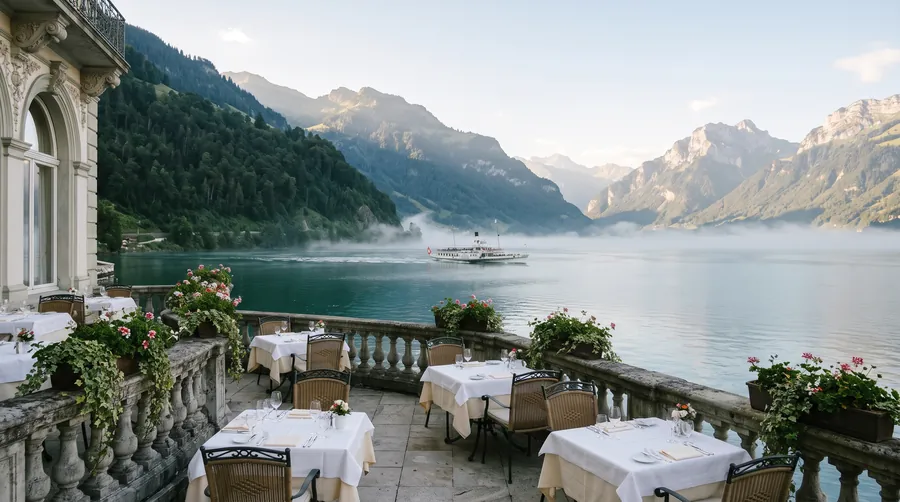
Elsewhere, the last mile can be a pleasure in itself. Lakeside hotels may meet the steamer at their own landing stage, ridge-top houses are reached by funicular, and many mountain hotels collect guests at the station by electric car. Send the hotel your train number and arrival time in advance and keep its phone number to hand in case of delays. In winter, ask whether snow or avalanche closures could affect the last section and how the hotel handles them.
Questions readers ask
How do I get from Zurich airport to a Swiss ski resort by train?
Trains leave from the station at the airport terminal, and most mountain resorts are two to three and a half hours away with one or two changes. Car-free villages such as Zermatt and Wengen are reached by rail all the way. Tell your hotel your arrival train so it can collect you at the station.
Can I send my luggage ahead in Switzerland?
Yes. The Swiss railways forward luggage from station to station or from door to door. Book online or at a staffed station and allow about a day, longer for door to door and around weekends. Keep the essentials for one night in your hand luggage.
Do I need a reservation for panoramic trains in Switzerland?
The dedicated panoramic trains require a seat reservation with a supplement, and summer departures often sell out weeks ahead. Regular regional trains on the same lines need no reservation. A rail pass covers the fare but usually not the reservation.
Independent editorial guidance. Our guides name no resorts, and resortris takes no payment for coverage. Seasons and conditions are general and can vary from year to year.
Try it nowBest Time to Go: The Resort CalendarChoose a month and see where the season is at its best, with typical air and water temperatures for twenty seven resort destinations.