





Your First Safari: A Day at a Lodge, Hour by Hour
From the knock on the tent before dawn to the lions you hear in bed: how a safari day runs, what happens when, and the rules that keep you safe.
Try “overwater”, “Maldives”, “ski-in” or “December”. Press Esc to close.

1.50° S · 35.15° E · Kenya and Tanzania
First-time and returning safari travellers who want big cats, the migration and open plains.
Local time
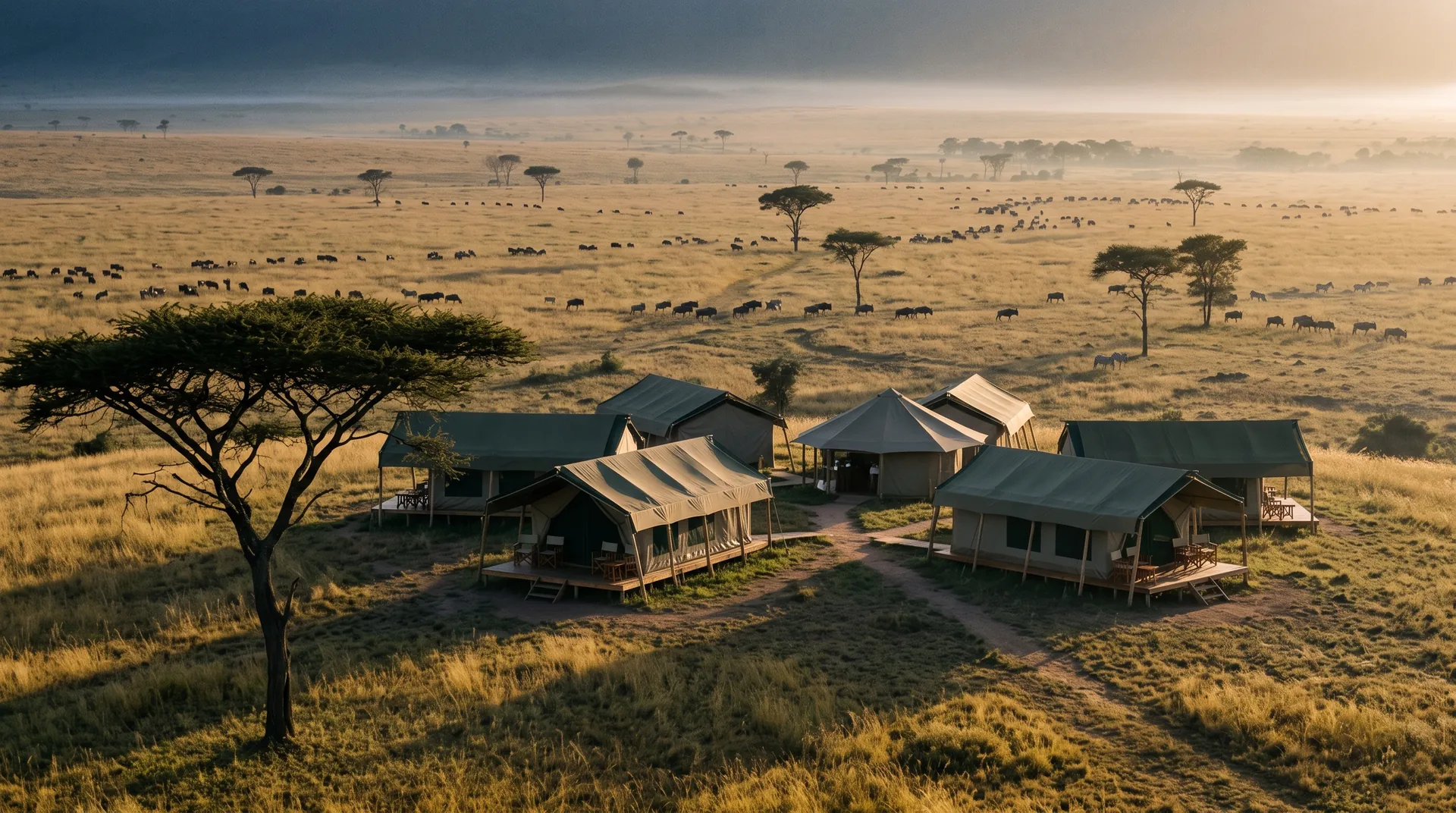
The Masai Mara in Kenya and the Serengeti in Tanzania are two halves of one ecosystem, a great sweep of grassland where more than a million wildebeest, with zebras and gazelles, follow the rains in a slow annual circle. Lions, cheetahs and leopards follow the herds, and the open plains make the predators unusually easy to watch. This is the classic safari of open savannah, flat-topped acacias and huge skies.
The migration is the famous draw, but the region rewards visits all year, as resident lions, elephants and giraffes stay when the herds move on. Choosing a camp means choosing an area: the national reserve and park for the great set pieces, or the private conservancies, where fewer vehicles, walking safaris and night drives change the experience. Many travellers combine two camps to follow the season.
When to go
July to October is the peak, when the herds cross the Mara River between the northern Serengeti and the Masai Mara. January and February are the second high season, when the wildebeest calve on the short grass plains of the southern Serengeti. March, June, November and December are good months with fewer vehicles. The long rains of April and May make some tracks impassable and several camps close. The timing shifts with the rains each year.
Typical long term values, indicative. Weather in any single year can differ.
Where to stay
Safari camps here range from permanent lodges to seasonal tented camps that move with the herds. In Kenya, the Masai Mara National Reserve is bordered by private conservancies with small camps and strict vehicle limits. In Tanzania the camps spread across the Serengeti: the southern plains around Ndutu for the calving, the central Seronera valley for resident predators, the Grumeti area in the west and the Kogatende area in the north for the river crossings.
From Europe, fly to Nairobi or Kilimanjaro, around eight and a half hours nonstop or with one change. A light aircraft then takes one to two hours to a bush airstrip near your camp, where your guide meets you.
Guides that mention the Masai Mara & Serengeti
From the knock on the tent before dawn to the lions you hear in bed: how a safari day runs, what happens when, and the rules that keep you safe.

When to go on safari in East and Southern Africa: the broad pattern of the migration, the dry winter, the green season and the Okavango flood.

National park or private concession, large lodge or small camp, one stop or three: the decisions that shape a safari far more than the suite.