





Golf Resorts · The guide
Golf Resorts: How to Choose One When Not Everyone Plays
How to pick a golf resort that works for the golfer and the companion who does not play: courses, tee times, coaching, daylight and the days off.
A golf resort can be the perfect holiday for one person and a long week of waiting for another. The courses get the photographs, but the questions that decide a stay are quieter: who controls the tee sheet, how far the first tee is from breakfast, what the non-golfer does between eight and four, and whether the clubs arrive in one piece. This guide works through them in the order they tend to matter.
On site, on the estate or a drive away
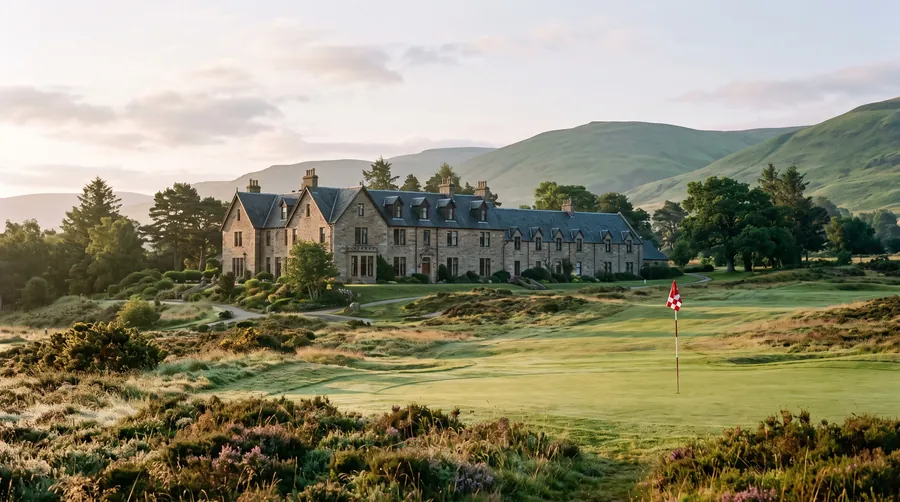
Golf resorts come in three broad shapes. Some own their course outright, with the first tee a short walk or buggy ride from the rooms and the tee sheet run for resort guests first. Others sit within a golf estate where the course is shared with members and villa owners, and guests compete with both for the best times. A third group markets itself on golf but sends you to partner courses some distance away by car.
Each shape has its place. An on-site course makes it easy to play nine holes before breakfast or late in the afternoon, and lets a non-golfing partner join for a few holes. A shared estate course usually has a livelier clubhouse and more competition for the popular times. Partner courses give variety over a longer stay, at the cost of transfers, earlier starts and less flexible days.
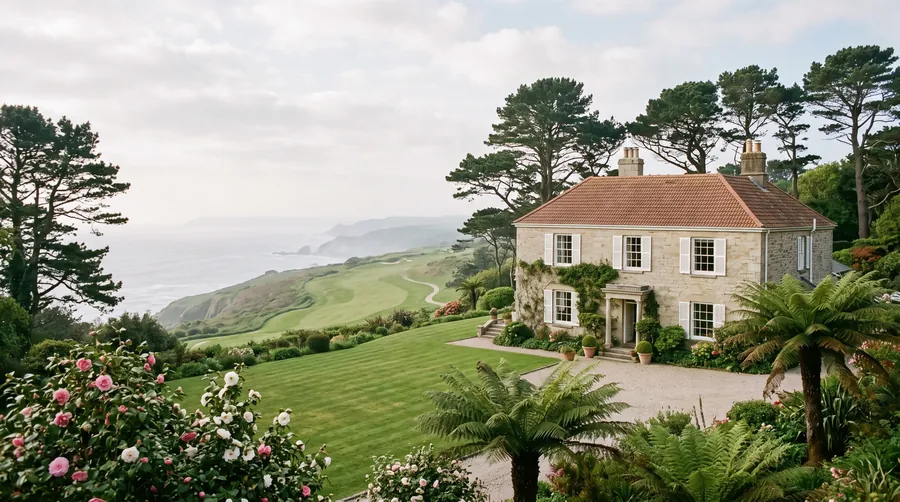
Look at the resort map with the course layout beside it. Rooms facing the fairways are quiet in the evening but can be woken by mowers at dawn, and villas beside a tee or green hear every group that passes. Ask which holes run past the accommodation, and whether stray balls from them can reach the terraces.
Tee time policies come before the course description
The quality of a course matters less than your ability to get onto it at a reasonable hour. Ask the resort, in writing, how guest tee times work:
- How far ahead guests can book, and whether booking opens as soon as the stay is confirmed.
- Whether guests have reserved windows or guaranteed times each day, and when members have priority.
- Which days are blocked for competitions, society days or shotgun starts, when every group sets off at once from different holes.
- Whether you may be paired with other players to fill a group, and whether two-balls are allowed at busy times.
- Whether a handicap certificate is required, and whether there is a maximum handicap.
- Whether buggies are compulsory, and whether they are restricted to paths after rain.
Handicap rules are the ones that most often catch visitors out. Many courses in Spain and Portugal ask to see an official handicap, and the better known ones may set limits. Bring proof, a certificate from your home club or your record from your national golf association, rather than a number you remember.
Ask about dress codes and pace of play as well. Most resort courses expect collared shirts and soft spikes, and a busy course in high season can take four to five hours for 18 holes. That is a long time for a companion waiting by the pool.
Practice facilities and coaching
Good practice facilities are one of the clearest signs of a serious golf resort. Look for a driving range with grass tees rather than mats only, a short game area with a practice bunker, and a putting green that runs like the greens on the course. Ask whether range balls are included, when the range opens and closes, and whether it is floodlit in winter.
Coaching varies from a single professional with a basket of balls to academies with video analysis and launch monitors that measure every swing. For most visiting golfers, a short series works better than one long lesson: an hour on the first day to identify one thing to change, practice in between, a playing lesson on the course midweek and a check before you leave. Book lessons when you book the stay, because the best teachers fill their diaries early in high season.
The academy is also where a non-golfer may surprise themselves. Many resorts run sessions for complete beginners, and some have a short par-3 course or a pitch and putt where a first round takes an hour rather than five. It turns golf from something one person does into something you can share for an afternoon.
What the non-golfer does all day
Count the hours honestly. With travel, warming up, the round and lunch afterwards, a game of golf easily fills five or six hours, and keen golfers often want to play four or five times in a week. The non-golfer’s days need as much thought as the tee times.
The best golf resorts for mixed couples have a life beyond the course: a proper spa, a pool large enough to swim in, tennis or padel, walking or cycling routes from the door, a beach within reach and a town worth an afternoon. Ask how far the beach really is and whether a shuttle runs, because golf estates are often set inland, behind the coast.
Then plan the shared moments. Many courses allow a non-playing companion to ride in the buggy, sometimes for a fee and sometimes not at all, so ask first. Meeting for the last few holes, a long lunch at the clubhouse, or alternating golf days with days out together keeps the week in balance. Nine holes in the cool of the morning with the afternoon free is often the best compromise of all.
Season, heat and daylight
Golf climates follow two calendars. In southern Portugal and Spain, spring and autumn are the busiest golf seasons, winter is mild and popular, and summer pushes play to early morning and evening. In Morocco and the Gulf, winter is the high season, and high summer in the Gulf is too hot for comfortable golf at midday, so rounds start at first light or under floodlights where courses offer them.
Winter brings shorter days. In the Algarve in late December there is a little under ten hours of daylight, so tee sheets are compressed and a late start may not finish before dark. On clear winter mornings, frost can delay the first starts at inland courses, and dew slows early putts. Book morning times early, and ask for the last start that still finishes in daylight.
Ask about maintenance dates too. Courses hollow tine their greens, punching small holes to keep the turf healthy, usually in spring and autumn, and the putting surfaces are bumpy for a week or two afterwards. In warm climates where courses are overseeded in autumn, fairways or greens may be closed or temporary for some weeks. None of this appears in the brochure, but the golf office will tell you if you ask.
Travelling with clubs
Airlines treat a golf bag as sports equipment, with their own rules on weight, size and fees, and many require it to be registered in advance. Do this when you book the flight, not at the airport, and check the rules for every leg, including any connection on a different carrier.
Pack clubs in a hard case or a well padded travel cover, with a telescopic support rod standing taller than the longest club to take the force of any drop. Unscrew the head of an adjustable driver and pack it separately, wrap the club heads in towels, and put your name and address inside the bag as well as on the tag. Lithium batteries for electric trolleys are often too large to fly, so check the rating with your airline or hire a trolley at the course.
Tell the transfer company how many golf bags you are bringing, because two players with clubs and holiday luggage will not fit in every saloon car. If you would rather travel light, ask the resort about hire sets: whether they are current models, which shaft flex and lengths are available, and whether left-handed sets need reserving.
Matching the resort to your group
Start with the balance of golf in your party. A couple where one plays every day needs a resort that would be worth visiting without the course. A group of four golfers can trade facilities for variety and choose a base with several courses within half an hour. A family with one keen player does well at a resort with an on-site course, an academy and a children’s club, so that nine holes fit into an ordinary day.
Then match the destination to the season. The Algarve and southern Spain suit spring, autumn and mild winters, a short flight from much of Europe. Morocco adds the snow-capped Atlas on the horizon in winter. Mauritius combines tropical courses with beaches and lagoons and is at its most comfortable in the drier months from about May to November. The Riviera Maya pairs jungle courses with the Caribbean from December to April.
Finally, put the questions in the checklist below to the resort before you commit. A good golf resort answers them quickly and specifically, because it hears them every week.
Questions readers ask
Do I need a handicap certificate to play golf in Spain or Portugal?
Many courses ask for one, and some of the better known courses set a maximum handicap. Bring official proof from your home club or national golf association. If you have no handicap, ask the resort which courses and academy sessions are open to beginners.
What can non-golfers do at a golf resort?
The best golf resorts offer a full spa, good pools, tennis or padel, walking and cycling, and easy access to a beach or town. Many also run beginners’ sessions or have a short par-3 course. Ask how far the beach is and whether a shuttle runs before you book.
Should I take my own golf clubs or hire them?
Your own clubs are familiar, but they mean a sports equipment fee and careful packing. Hire sets avoid both and are often good at resort courses; ask in advance whether they are current models and whether your shaft flex or a left-handed set is available. For a long golf stay, most keen players take their own.
Independent editorial guidance. Our guides name no resorts, and resortris takes no payment for coverage. Seasons and conditions are general and can vary from year to year.
Try it nowBest Time to Go: The Resort CalendarChoose a month and see where the season is at its best, with typical air and sea temperatures for twenty four resort destinations.