






Overwater or Beach Villa: How to Decide
Privacy, shade, snorkelling, sand underfoot, wind and children: a clear way to choose between a villa over the lagoon and one on the beach.
At resorts that offer both, the choice between an overwater villa and a beach villa is the first big decision, and often the most expensive. The water villa is the image on the brochure; the beach villa is the one many repeat guests quietly prefer. Neither is simply better. Each suits a different way of spending the day, and the right answer depends on who you travel with, which month you go and what you plan to do.
Privacy: two different kinds
A beach villa usually sits in its own garden behind a screen of planting, with a short path to the sand. Inside the walls, privacy is often excellent: an outdoor bathroom, a garden shower, a pool hidden from view. The beach in front, however, is rarely yours alone. On a resort island the sand is usually continuous, and other guests and staff walk along the waterline, especially in the early evening.
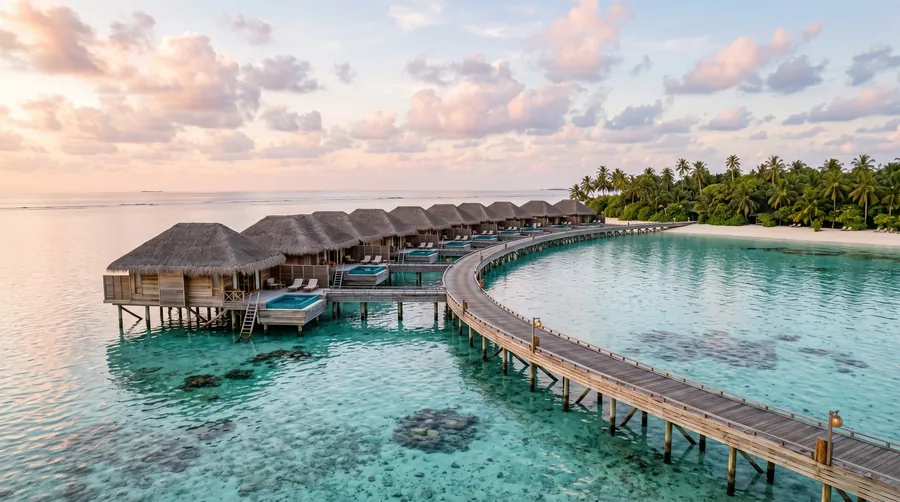
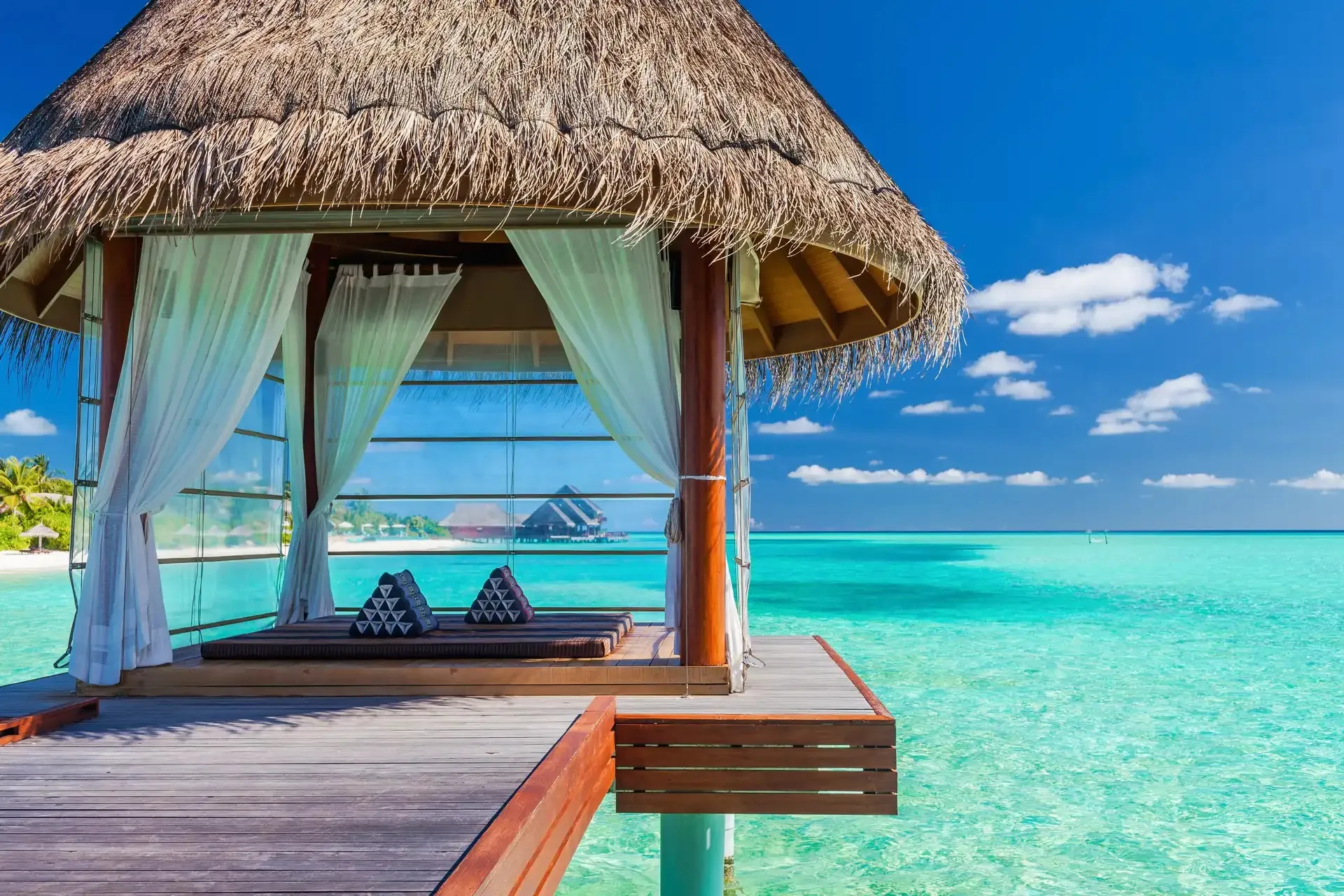
An overwater villa has no garden and no beach to share. The deck faces open water and nobody walks past on that side. The exposure comes from the other direction: the boardwalk behind you and the neighbours’ decks to the left and right. Well designed jetties stagger the villas and screen the decks; tightly spaced ones do not.
If you value being unseen while you swim, a water villa towards the tip of the jetty usually wins. If you want a hidden garden where you can sit outside in a towel, a beach villa with a walled courtyard is hard to beat.
Shade, heat and wind
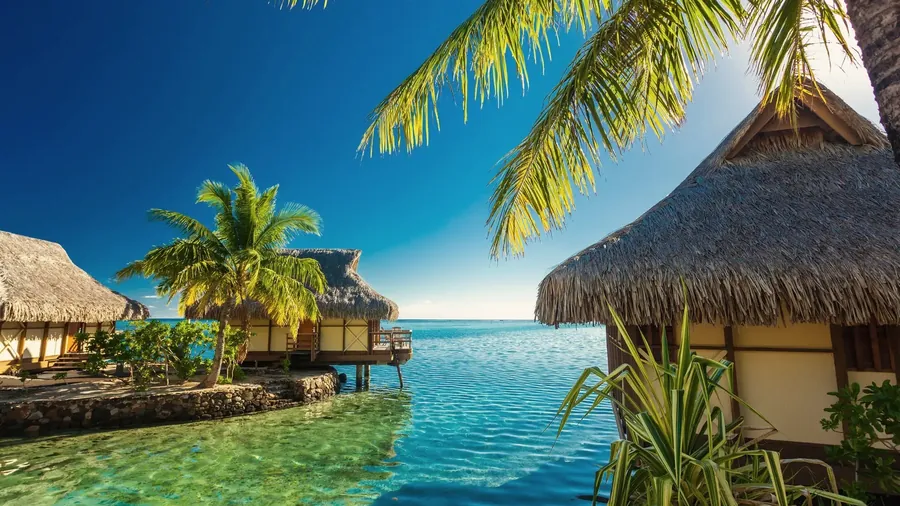
Beach villas tend to be the cooler place to spend an afternoon. Palms and tropical planting shade the garden, the sand stays cooler under the trees and you can move a lounger with the sun. On an overwater deck the shade comes from the roof overhang, an umbrella and little else. In the hottest hours, a water villa deck can feel like the deck of a boat.
The same openness brings breeze. Overwater villas catch the wind, which keeps them pleasant on still, humid days and keeps most mosquitoes and sandflies away; beach villas with dense gardens can feel airless and attract more insects after rain. In windy months the balance shifts. A water villa on the exposed side of a jetty hears waves under the floor and gets spray on the deck, while a beach villa on the sheltered side of the island may be perfectly calm.
Ask which side of the island is sheltered in your month and which villas sit there. In the Maldives the wind tends to come from the northeast in the drier season and from the west or southwest in the wetter one.
Snorkelling and swimming
An overwater villa gives you the lagoon from your own steps. Towards the tip of a jetty the water is often deep and clear enough to swim properly and to see fish and rays without leaving home. Near the shore end it may be shallow, and at low tide the lagoon below can drop to ankle depth.
A beach villa offers the easier entry: you walk from sand into calm water and can stand at any point. That suits less confident swimmers, older travellers and children. For snorkelling, what matters is the distance to the house reef, the coral edge where the lagoon drops away into deeper water. On some islands the reef is a short swim from the beach; on others it lies beyond a wide, shallow lagoon and is easier to reach from the end of a jetty or by boat.
Look at the resort map and a satellite view together. The darker band where the lagoon meets the reef edge shows how far each villa is from good snorkelling.
Sand underfoot and the shape of the day
The pleasure of a beach villa is barefoot living: bed, terrace, sand and sea within a few steps, with no boardwalk in between. You can wander out at sunrise in whatever you slept in and come back from a swim without crossing anyone’s path. Beaches do change, though. On some islands the sand shifts with the seasons, and a villa with a wide beach in one month can have a narrow strip in another. Ask for recent photographs of the beach in front of your villa.
An overwater villa makes the day more vertical: deck, steps, water, deck. It suits people who swim several times a day and are happy to read on a lounger above the lagoon. If you like to stroll along the beach between swims, remember that from a water villa the beach is a walk away rather than the front step.
Travelling with children or older relatives
For young families, the beach villa is usually the simpler choice. A garden and a beach are natural places to play, the water starts shallow, and the risks are visible ones. Overwater decks open straight onto the lagoon, plunge pools are rarely fenced and some resorts set a minimum age for water villas. Larger beach villas and residences also offer second bedrooms more often than overwater categories do.
The same logic applies to older relatives and anyone with limited mobility. A beach villa is usually reached by a level path or by buggy, with no long jetty to walk and no ladder into the sea. If grandparents join for part of the stay, ask for a beach villa close to the restaurants for them, even if the rest of the party sleeps over the water.
The split stay
Many travellers settle the question by staying in both. A split stay, often a few nights on the beach and a few over the water, gives you sand and shade as well as the lagoon from your own steps. It can also cost less than a full stay in the higher category.
The order deserves some thought. Starting on the beach lets you recover from the flight, find your way around and keep the highlight for the end. Starting over the water suits honeymooners who want the picture from the first evening, and finishing on the beach gives you shade and a garden for the slow last days.
Ask the resort to move your luggage while you are out, so that the change costs you a lunch rather than half a day. Confirm both villa categories and both positions in writing, and make sure the move does not fall on a day with an early excursion. On a stay of a week or less, one change is plenty.
Questions readers ask
Is an overwater villa better than a beach villa?
Not as a rule. Overwater villas offer open views, breeze and swimming from the deck, while beach villas offer shade, sand underfoot and an easier way into the water. Strong swimmers and couples often favour the water; families and those who like shade often prefer the beach.
Which is better for families, a beach villa or a water villa?
For young children a beach villa is usually the calmer choice, with a garden, shallow water and no open deck above the lagoon. Some resorts set minimum ages for water villas. Teenagers who swim well often enjoy a water villa, sometimes as part of a split stay.
Is a split stay between a beach and a water villa worth it?
On stays of six nights or more it often is, because you enjoy both settings and may pay less than for a full stay over the water. Ask the resort to move your luggage while you are out and confirm both villas in writing. On very short stays, a single villa is usually more restful.
Independent editorial guidance. Our guides name no resorts, and resortris takes no payment for coverage. Seasons and conditions are general and can vary from year to year.
Try it nowVilla Chooser: Overwater, Beach or Pool VillaSet what matters most, from privacy to snorkelling to children, and see which villa type and position suit your stay.