




Sunrise or Sunset Side: How Orientation Shapes a Resort Stay
East or west facing changes the light, the heat on your terrace and the water in front of it. How to choose a side and ask for it.
Two villas in the same category, a few hundred metres apart, can give you two different holidays. One wakes you with sun on the water and is in shade by lunch; the other is quiet in the morning and glows at dusk, with a terrace that has been in the sun for hours. Orientation decides light, heat, wind and sometimes the swimming, so it is worth choosing deliberately.
Morning light: the case for the east
An east-facing villa gives you the sunrise without effort. The sky lightens over the water, the first swim happens in soft light and the terrace is pleasant for breakfast. By early afternoon the building throws its own shade across the deck, and the hottest part of the day passes with the sun behind you.
That makes the east side a strong choice for early risers, for anyone who sleeps in the afternoon and for families with small children, whose day starts early anyway. East-facing rooms also tend to be cooler in the evening, because walls and decks have not been soaking up late sun. Close to the equator, sunrise comes at much the same time all year and twilight is short, so be outside a little before the sun appears.
Evening light: the case for the west
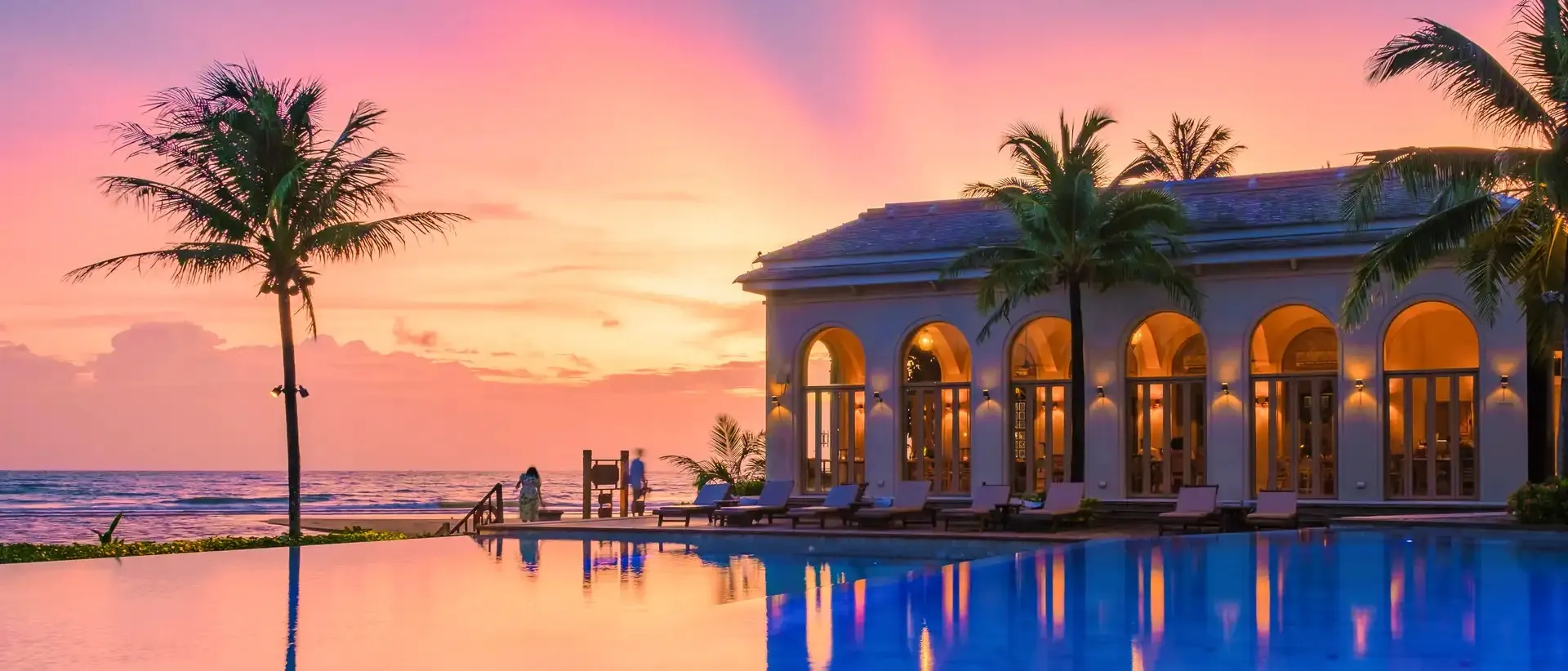
Sunset villas are the ones in the brochure, and many resorts price them higher. The appeal is real: the long golden light, the colour in the sky after the sun has gone and the ritual of a drink on the deck. If your holiday revolves around evenings at home, the west side earns its premium.
The cost is heat. A west-facing terrace takes the afternoon sun at its strongest, the plunge pool warms and the daybed can be too hot to use from early afternoon until the light softens. Look for villas with a deep roof overhang, a pergola or trees on the western edge. The air conditioning also works hardest in the late afternoon, which matters if you are sensitive to the hum of outdoor units.
Villas facing north or south are the overlooked compromise, and often cheaper. Near the equator they see sunrise and sunset off to one side, and with an open horizon you may catch a little of both. Further from the equator, the side facing the equator gets sun for most of the day while the opposite side stays largely in shade: south-facing terraces are the sunny ones in the Mediterranean, north-facing ones in Mauritius. In a hot climate, the shaded side can be the more comfortable choice for long lunches at home.
Wind and waves change sides with the seasons
Orientation is not only about light. On islands in the trade wind belts, the east coast usually faces the wind and the west coast is sheltered, so calm water and sunset often come together. That is part of why west-facing villas are so prized.
Monsoon regions complicate the picture. In the Maldives the north-east monsoon, from about December to April, leaves the western side of most islands calm, so sunset villas get both flat water and evening light. From about May to October the south-west monsoon turns the west into the windward side, with more chop, stronger breezes and the occasional splash on the deck, while the east becomes the sheltered shore. On the Andaman coast of Thailand, the west-facing beaches of Phuket are calm in the dry season and can carry heavy surf and dangerous currents during the south-west monsoon.
So the right question is not only which side has the sunset, but which side is sheltered in your month.
The sunset moves along the horizon
The sun does not set at the same point all year. Near the equator its setting point swings between roughly west-north-west around the June solstice and west-south-west around the December solstice, and further from the equator the swing is wider. A villa on the north-western tip of an island may see the sun drop into the sea in June and behind the palms or the spa in December.
Before you request a villa, check where the sun will set on your dates. Several astronomy and photography apps draw the line of sunrise and sunset on a map for any day. Lay that line over the resort and see whether open water, a neighbouring island or the arrival jetty sits in the way.
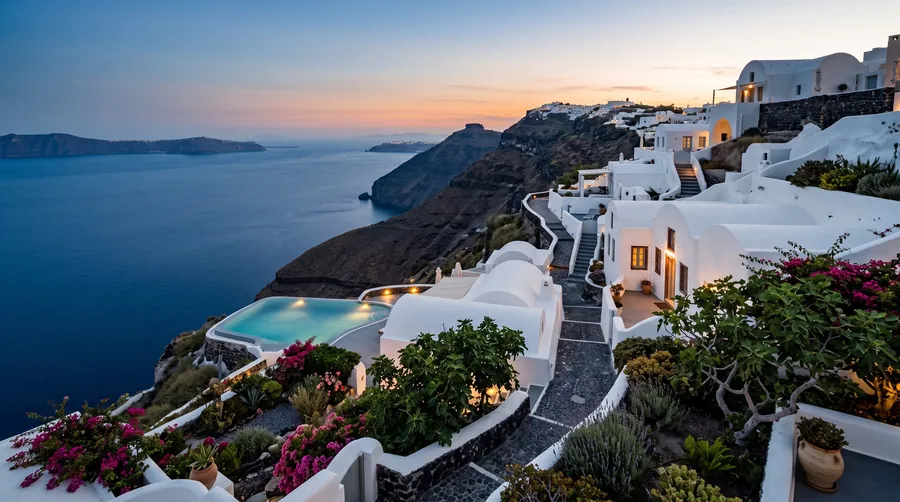
Some coasts make the choice for you. The Riviera Maya faces east across the Caribbean, so the sea gives you sunrises, not sunsets. On Santorini the caldera villages face west for the famous evenings but have no beach, while the dark sand beaches lie on the east and south coasts.
Photography: what each side gives you
East-facing villas suit early photographers: the light is clean, the sea is often calmer in the morning and there are few people on the beach. For lagoon shots, the water shows its strongest turquoise when the sun is high and behind you, roughly from mid-morning to early afternoon, whichever side you sleep on.
West-facing villas give silhouettes, warm skin tones and the afterglow, which is often more colourful than the sunset itself. If you plan to fly a drone, ask first: rules differ by country, and many resorts restrict flights to protect the privacy of other guests.
How to read a resort map
Resort maps are drawn to sell, not to navigate. Many are not drawn with north at the top, and some exaggerate the size of the beaches and the space between villas. Find the compass rose, or compare the map with a satellite view, before you decide which villas face where.
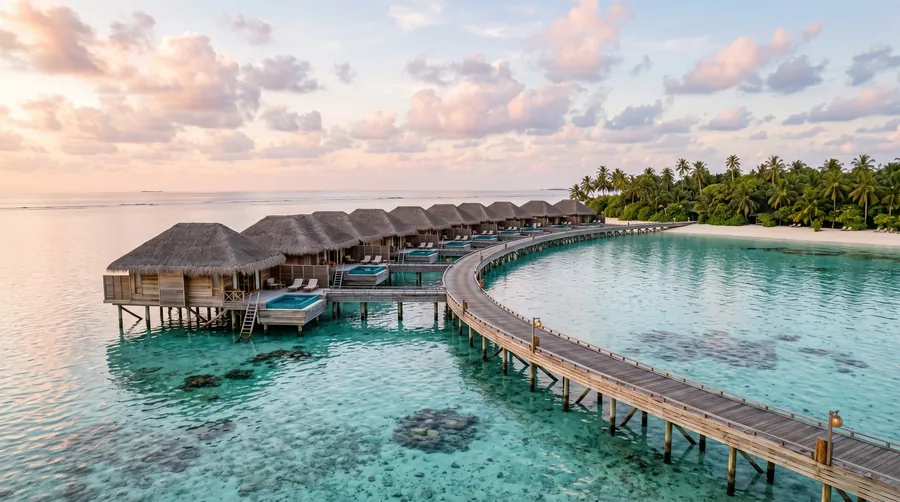
Then mark what matters: the arrival jetty and any seaplane platform, the main restaurant and bar, the watersports centre, the generator and service areas, and the direction of the open sea. Villas at the end of a jetty usually have the widest view; those near its root sit closer to the beach and to the paths. On a curved jetty, overwater villas in the same category may face several directions.
Requesting a side, and making the request count
Many resorts sell sunrise and sunset as separate categories; in that case the side is guaranteed and you pay for it. Where they do not, a request is only a request. Make it specific and early: give villa numbers or the stretch of beach you prefer, explain why (morning light, afternoon shade, the sheltered side in your month) and ask for confirmation of the allocation a few days before arrival.
In the Maldives, also check which clock the resort keeps. Some set their time an hour ahead of Malé, which moves sunrise and sunset later on the resort clock. Confirm sunset cruises, sandbank dinners and spa slots in the time the resort actually uses.
Questions readers ask
Is a sunset villa worth the extra cost?
It is if you spend your evenings on the terrace and travel in a month when the west side is sheltered. It is less useful if you are already at dinner by sunset, or if the afternoon heat on a west-facing deck keeps you indoors. Check where the sun sets on your dates before paying the premium.
Which side of an island is calmer in the Maldives?
It depends on the monsoon. From roughly December to April the western side of most islands is sheltered, and from about May to October the eastern side usually is. Reefs and neighbouring islands change this locally, so ask the resort about your villa.
Can I request a sunrise or sunset villa?
Yes, but unless orientation is part of the category you book, it is a request rather than a guarantee. Name specific villa numbers or a stretch of beach, explain your reason and ask for confirmation of the allocation shortly before arrival.
Independent editorial guidance. Our guides name no resorts, and resortris takes no payment for coverage. Seasons and conditions are general and can vary from year to year.
Try it nowBoard Basis Calculator: All-Inclusive or NotEnter your stay and your habits and see whether breakfast only, half board, full board or all-inclusive is the better value.